

 18 Mar 2026
Most parents in Gurgaon do not think about the dentist until their child already has a toothache. By that point, the tooth has usually been hurting for a while, and what could have been a simple fix has turned into a bigger one. The good news is that most dental problems in children are completely preventable. You need to know when to start, what to watch for, and where to go.
This guide covers everything — first-visit timing, milk tooth care, fluoride, sealants, and what a pulpectomy actually is — in simple, plain language. No medical jargon. Just what you need to know as a parent.
Aspen Dentals — Gurgaon's First Tri-Specialty Dental Clinic
With a dedicated paediatric department, specialist pedodontists, and three convenient locations in Sector 53, Sector 54 and Sector 65, Aspen Dentals is built specifically for families in Gurgaon. Explore kids dentistry services →
The Golden Rule — First Dental Visit by Age 1
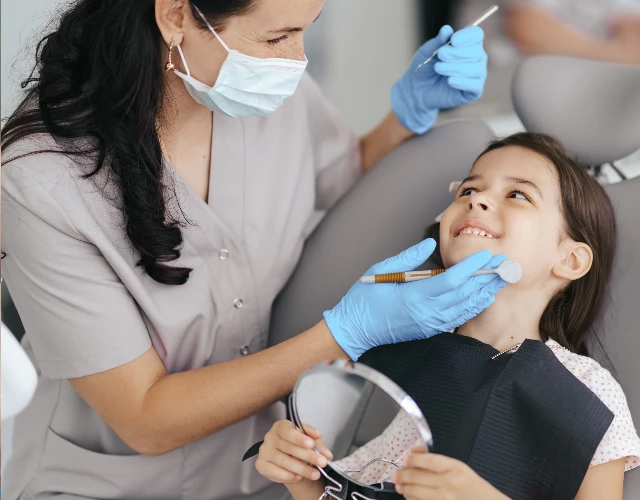
Most parents assume the dentist becomes relevant only once the child has a full set of teeth. However, dental experts recommend bringing your child in much earlier — around their first birthday, or within six months of the first tooth appearing.
That may feel too early. But the first dental visit is not really about the teeth at all. It is about getting your child comfortable with the environment — the chair, the light, the dentist's friendly face — before there is any real problem to deal with. A child who has already visited the dentist a few times for a friendly check-up will behave very differently from a child brought in for the first time because of pain.
What Happens at the First Visit?
At Aspen Dentals' kids dentistry department in Gurgaon, the first visit for a young child is deliberately gentle and unhurried. The paediatric dentist will:
- Check the teeth that have come in so far
- Look at the gums, jaw, and bite
- Talk to you about feeding habits, pacifier use, and night-time nursing
- Show you how to clean your child's teeth at home
- Answer every question you have — however basic it feels
The whole thing usually takes 20 to 30 minutes, and for most children, it ends with a sticker and a smile.
Do Milk Teeth Really Matter? Yes, More Than You Think
A very common belief among parents — and grandparents who will happily tell you this — is that milk teeth do not really matter because they will fall out anyway. This is one of the most damaging dental myths in circulation.
Why Milk Teeth Matter
- Speech development — teeth help children form sounds properly; missing front teeth affects how certain letters are pronounced
- Space holders — milk teeth hold space in the jaw for permanent teeth; losing them too early causes crowding later
- Eating well — children with painful milk teeth eat less and miss out on nutrition at a critical growth stage
- Confidence — visible decay at school age affects self-esteem more than most parents realise
Moreover, decay in milk teeth can spread to the permanent teeth growing just beneath them. Protecting a milk tooth is not just about that tooth — it protects the adult tooth waiting underneath.
How to Care for Your Child's Teeth at Home
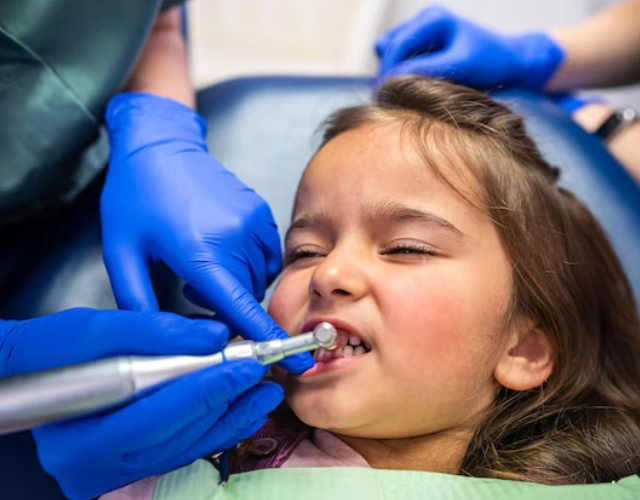
Caring for your child's teeth does not require anything fancy. It starts with the basics done consistently.
Before the First Tooth Appears
Even before teeth come in, gum health matters. After every feed, wipe your baby's gums with a clean, damp cloth. This removes milk residue and gets your child used to having their mouth touched — which makes brushing much easier later on.
Ages 0–2: The First Teeth
Start cleaning the teeth as soon as you see the first tooth. Use just a little fluoride toothpaste — as small as a grain of rice. Brush twice a day, gently, in the morning and before bed. Do not put your child to bed with a bottle of milk or juice. The sugar sits on the teeth all night, causing rapid, severe decay in very young children.
Ages 2–6: Building the Habit
Children in this age group cannot brush their teeth effectively on their own — their fine motor skills are not sufficiently developed. You need to supervise and assist them until they are at least 6 to 7 years old. Brush twice daily with toothpaste about the size of a pea. Try to limit sticky snacks like biscuits, toffees, and dried fruit. Water is a better between-meal drink than juice or sweetened beverages.
Fluoride Treatment for Children — What Is It and Should You Do It?
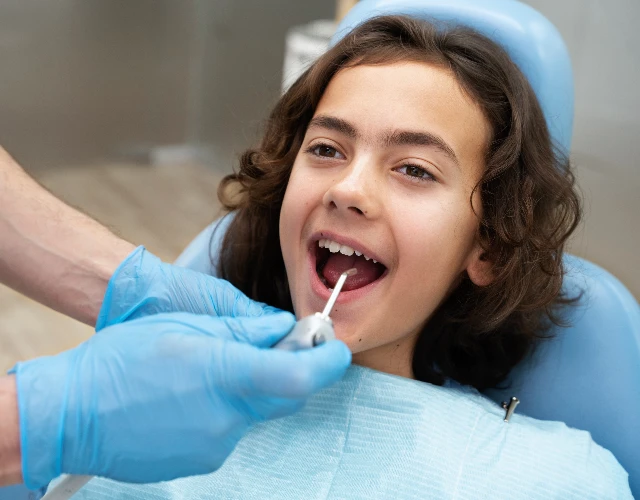
Fluoride is a natural supplement that strengthens tooth enamel and helps prevent decay. It has been used safely in dentistry for decades and remains one of the most effective tools for preventing cavities in children.
What Does the Treatment Involve?
At the clinic, fluoride treatment involves applying a concentrated fluoride varnish directly onto the teeth. It takes about two to three minutes, is not uncomfortable, and works over the next several hours to strengthen the enamel. Most children benefit from this every six months, alongside their routine check-up.
It is particularly recommended for children who eat a lot of sweet foods, those with early signs of decay, and children whose teeth show white spots — the earliest warning signs of enamel weakening.
Parent Tip
Fluoride toothpaste at home and professional fluoride varnish at the clinic work together. One does not replace the other — they protect different surfaces and in different ways.
Pit and Fissure Sealants — The Simple Cavity Preventive Most Parents Have Never Heard Of
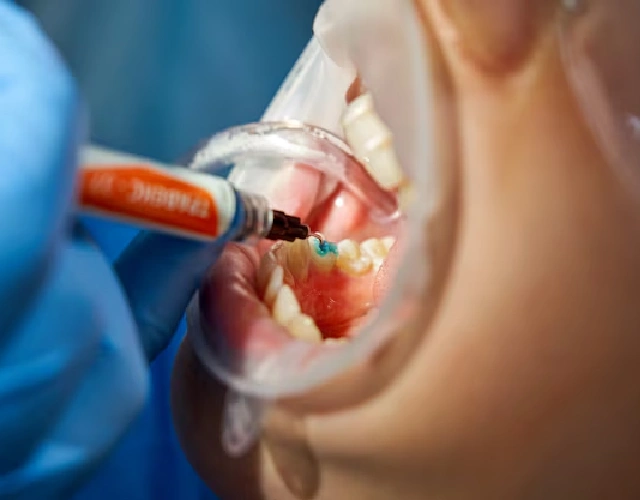
Your back teeth have grooves and tiny pits where food can get stuck. These are where food particles and bacteria collect most easily, and where cavities most often start. Even good brushing cannot always clean the very bottom of these grooves.
Sealants solve this by filling those grooves with a thin protective coating. Bacteria cannot get in, so decay cannot start. The procedure involves no drilling and no injections. The dentist cleans the tooth, applies a mild conditioning liquid, and paints on the sealant, which sets in about 30 seconds. Children barely notice it happening.
Who Should Get Sealants and When?
The best time for sealants is around age 6 for the first molars, and again around age 12 for the second molars. Sealants can last several years and are one of the most cost-effective investments in your child's dental health.
What Is a Pulpectomy? A Simple Explanation for Parents
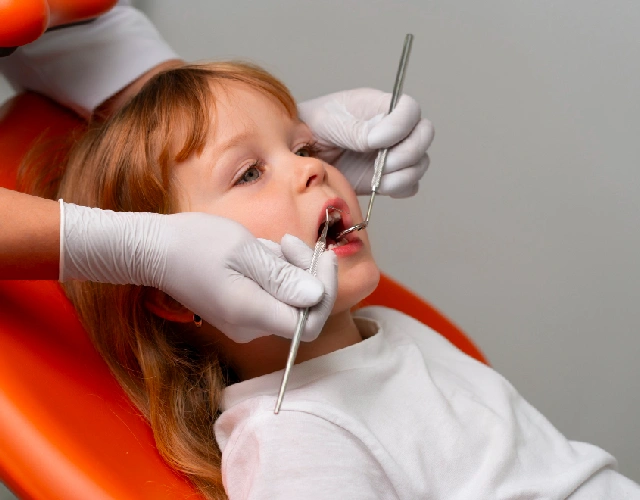
If your child has severe tooth decay that has reached deep inside the tooth, the dentist may recommend a pulpectomy. The word sounds alarming, but the idea is simple — it is the children's version of a root canal.
Inside every tooth is a soft area called the pulp. When decay reaches the pulp, the tooth becomes infected and painful. A pulpectomy removes the infected pulp, cleans the inside of the tooth, and fills it with a special material to seal it.
Why Not Just Remove the Tooth Instead?
Removing a milk tooth seems simpler, and sometimes extraction is the right call. However, when a milk tooth is removed too early, the surrounding teeth shift to fill the gap. The permanent tooth that was supposed to come in finds no room, leading to crowding and misalignment later.
A pulpectomy saves the tooth, relieves the pain, and maintains the space for the permanent tooth which is yet to erupt. After the procedure, a stainless steel crown is usually placed over the tooth for protection until it naturally falls out on its own schedule.
Is a Pulpectomy Painful?
With local anaesthesia, the child feels no pain during the procedure. Most children are comfortable throughout. The soreness afterwards, if any, is mild and settles within a day or two. The paediatric team at Aspen Dentals is trained in child-friendly techniques that keep the experience as easy as possible.
How Often Should Your Child Visit the Dentist in Gurgaon?
The standard recommendation is every six months — a check-up and professional cleaning twice a year. For most children, this is sufficient to catch problems early and apply preventive treatments at the right time.
Some children benefit from more frequent visits — particularly those who are more caries-prone, have braces, or have had dental work done that needs monitoring.
Signs that your child needs to be seen sooner include tooth pain, sensitivity to hot or cold, visible brown or black spots on teeth, swollen gums, or complaints about difficulty in chewing.
Your Child's Dental Milestones — Quick Reference
| Age | Milestone | What to Do |
|---|---|---|
| 6 months | First tooth appears | Start brushing with a rice-grain smear of fluoride toothpaste |
| 1 year | First dental visit | Baseline check-up, gum assessment, home care guidance |
| 2 years | All 20 milk teeth present | Fluoride varnish recommended, 6-monthly check-ups established |
| 6 years | First permanent molar erupts | Best time for pit and fissure sealants on first molars |
| 7–8 years | Orthodontic screening | Early assessment of bite, spacing, and jaw development |
| 12 years | Second permanent molar erupts | Sealants on second molars; orthodontic treatment if needed |
Managing Dental Anxiety in Children — Practical Tips for Parents
Dental fear in children is real and common. However, it is almost entirely preventable when the first dental experiences are positive ones. Here are things that genuinely help:
- Start early — before there is any pain or problem to deal with
- Never use the dentist as a threat
- Talk about dental visits as normal, routine events — not as something scary
- Let your child hold their toothbrush and explore it before the visit
- Read books or check videos about visiting the dentist beforehand
- Choose a clinic with a dedicated paediatric space and team trained in child communication
Why Gurgaon Parents Choose Aspen Dentals for Their Children
Aspen Dentals is Gurgaon's first tri-specialty dental clinic — bringing together specialists in Kids Dentistry (Pedodontics), Orthodontics, and Periodontics under a single roof. For families, this means your child's dental journey — from the first milk tooth to braces in their teens — can be managed in one familiar, trusted place.
The paediatric team takes an unhurried, tell-show-do approach — explaining everything before doing it, in language the child can understand. Most children leave the clinic happy because they felt respected and comfortable throughout.
What Gurgaon Parents Say
"My daughter was terrified of the dentist. The team at Aspen made her feel so comfortable that by the end of the first visit, she was asking when she could come back. The paediatric care here is genuinely exceptional."
— D. Verma, Gurgaon parent
Ready to Book Your Child's First Visit?
Aspen Dentals — Gurgaon's Most Trusted Kids Dentist
Three locations open 7 days a week · Sector 53, Sector 54 & Sector 65 · 10:30 AM – 7 PM
Book Appointment → WhatsApp Us
Call: +91-9667775530 | hi@aspendentals.com
Explore More at Aspen Dentals:
Kids Dentistry | Pulpectomy | Fluoride Treatment | Pit & Fissure Sealants | Space Maintainer | Preventive Dentistry | Orthodontics | Book Appointment
Frequently Asked Questions — Kids Dentist in Gurgaon
At what age should I take my child to the dentist for the first time?
Around 12 months, or within six months of the first tooth appearing. Starting early gets your child comfortable before any problem develops.
Are milk teeth important if they are going to fall out anyway?
Yes. Milk teeth hold space for permanent teeth, support speech, and affect how confidently your child eats and smiles. Decay in milk teeth can also spread to the permanent teeth growing underneath.
How do I know if my child has a cavity?
Watch for white spots, brown or black marks on the teeth, sensitivity to hot or cold, or complaints of toothache. Some cavities have no visible signs at all, which is why regular check-ups matter.
Is fluoride treatment safe for children?
Yes, completely. Fluoride varnish has been used safely in dentistry for decades and is one of the most effective ways to prevent cavities in children.
How to differentiate between a pulpectomy and a root canal?
A pulpectomy is a root canal designed for milk teeth. It removes the infected pulp, cleans and seals the tooth, and saves it from extraction — protecting the space for the permanent tooth underneath.
My child is very scared of the dentist. What should I do?
Choose a clinic with a dedicated paediatric team, like Aspen Dentals in Gurgaon. Avoid framing the dentist as scary — talk about it casually and let the team's child-friendly approach do the rest.
How often should my child visit the dentist?
Every six months is the standard recommendation for most children. Your child's dentist may suggest more frequent visits depending on their individual carries risk.
What are dental sealants, and does my child really need them?
Sealants are a thin protective coating applied to the back teeth to block the deep grooves where decay starts most easily. No drilling, no needles — just straightforward protection that lasts years.
At what age should I be concerned about my child's tooth alignment?
An orthodontic screening around age 7 to 8 is recommended. Catching alignment issues early allows the dentist to plan ahead and avoid more complex treatment later.
Where is Aspen Dentals located in Gurgaon?
Aspen Dentals has three locations — South Point Mall in Sector 53, DLF Summit Plaza in Sector 54 and M3M Tee Point in Sector 65. All are open Monday to Sunday, 10:30 AM to 7 PM.


