
 24 Sep 2026
Most people who search "Invisalign or braces?" already know what they want to look like at the end. The harder part is figuring out which one gets you there without disrupting your life for the next year or two.
Both work. They move teeth using gentle, steady pressure. The difference is in how that pressure is delivered, and that changes almost everything else: comfort, cost, eating, cleaning, and which problems each can fix.
How each one works
Braces are brackets glued to your teeth and joined by a thin wire (called an archwire). The orthodontist tightens or adjusts the wire every few weeks, and the teeth slowly follow. Because braces are fixed in place, they work all day, every day.
Invisalign uses a series of clear, removable trays. Each tray is made from a digital scan of your mouth and moves your teeth a small step. You switch to the next tray every one to two weeks. You can read a fuller explanation in our guide on how Invisalign aligners work.
Invisalign vs braces: the quick comparison
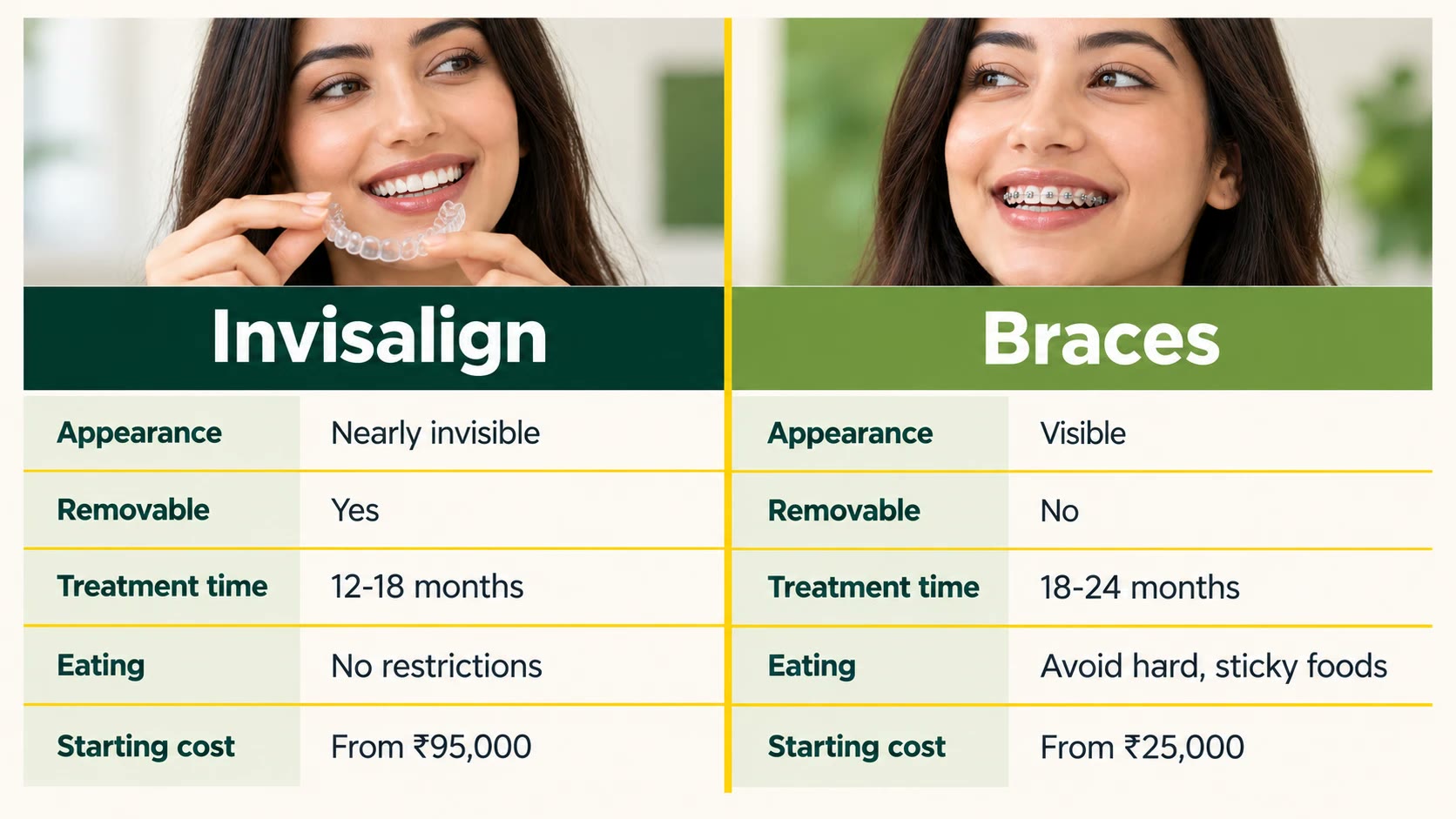
| Factor | Invisalign | Braces |
|---|---|---|
| Appearance | Nearly invisible | Visible (metal or ceramic) |
| Removable | Yes, for meals and cleaning | No, fixed until treatment ends |
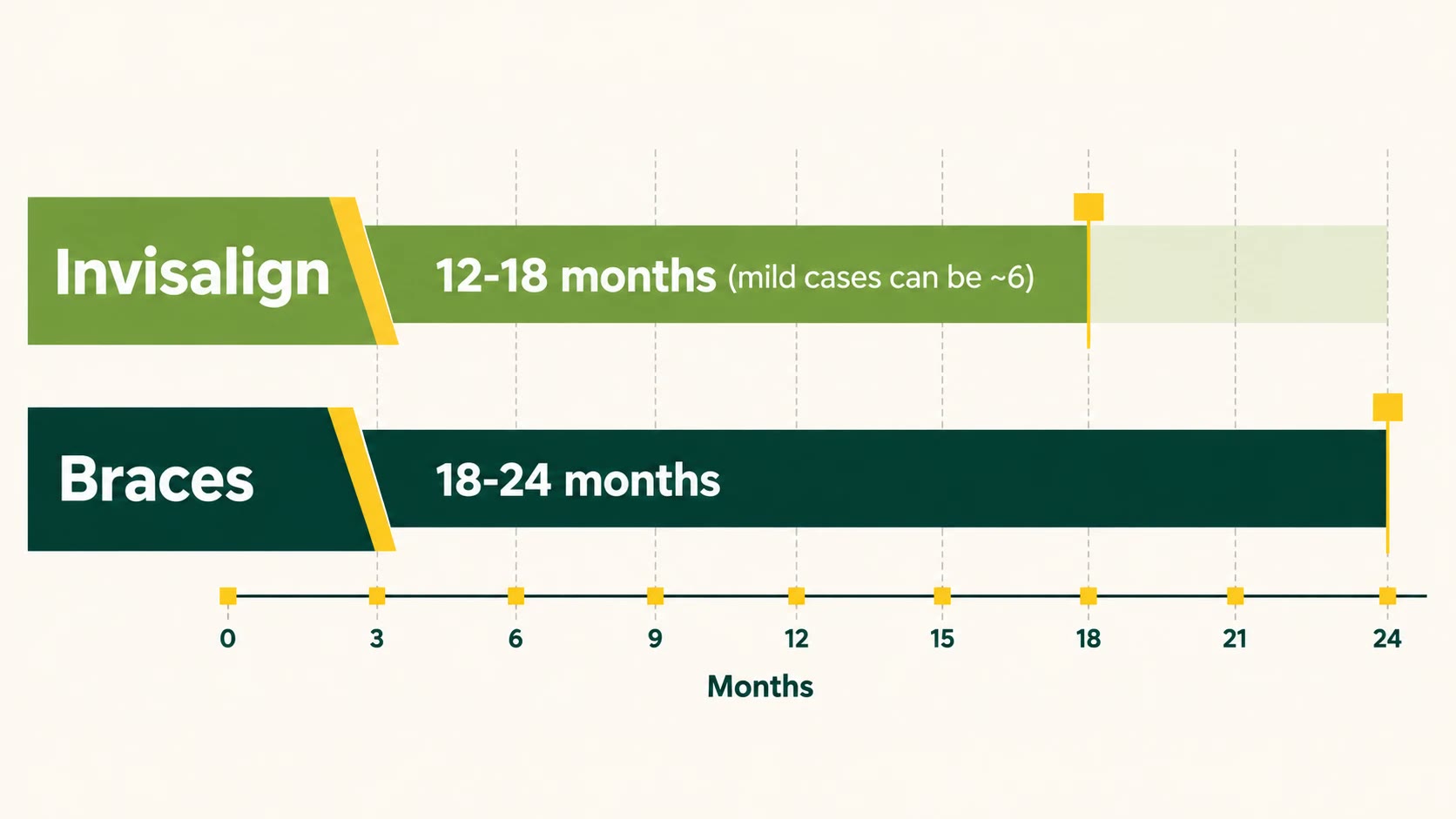
| Typical treatment time | 12 to 18 months (mild cases can be around 6) | 18 to 24 months for most cases |
| Eating | No restrictions, aligners come out | Avoid hard, sticky foods |
| Cleaning | Brush and floss as usual | Needs extra care around brackets |
| Complex bite problems | Suits mild to moderate cases; some complex ones need braces | Can handle a wider range of cases |
| Starting cost at Aspen Dentals | From ₹95,000 | Metal braces from ₹25,000 |
Timelines and prices vary with the case. Your orthodontist can only give an accurate estimate after examining your teeth and taking scans.
Comfort and daily life
Braces can rub against the cheeks and lips for the first couple of weeks, and teeth feel sore after each adjustment. Wax helps with the rubbing.
Invisalign has its own adjustment period. New trays feel tight for a day or two, and you may notice a slight lisp at first. Most people adapt quickly.
- Eating: with braces you avoid hard and sticky foods. With Invisalign you take the trays out to eat and drink anything other than water.
- Cleaning: braces trap food around brackets. Aligners come out, so brushing and flossing stay normal.
- Discipline: Invisalign only works if you wear the trays for most of the day, usually 20 to 22 hours. Braces don't depend on you remembering.
Who each option suits best
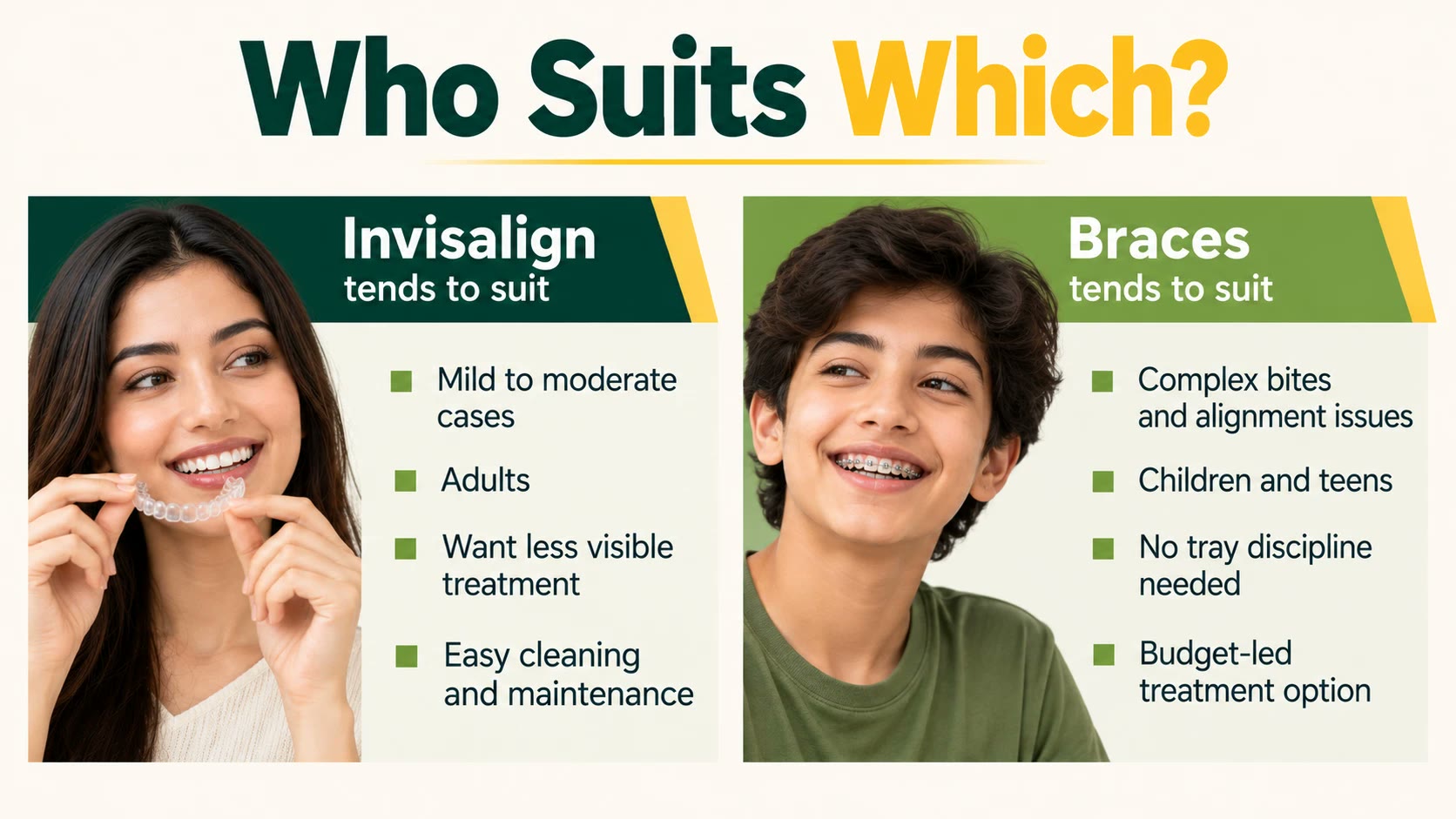
Invisalign tends to suit you if:
- You are an adult or older teenager who is confident about wearing trays consistently
- Your crowding, spacing or bite issues are mild to moderate
- You want a less visible option for work or social settings
- You are prone to gum irritation and want easier cleaning
Braces tend to suit you if:
- Your bite problem is complex, such as a significant overbite or underbite
- You'd rather not depend on remembering to wear trays
- You are a younger child or teenager still losing baby teeth
- Budget is the main deciding factor
There is also a middle path. Lingual braces sit behind the teeth so they're hidden, and ceramic braces use tooth-coloured brackets. Metal braces remain the most affordable fixed option. If you're weighing these against each other, our guide to types of braces in Gurgaon covers all of them.
What about cost?
Braces usually cost less than Invisalign. Across India, the Invisalign price ranges widely depending on how complex your case is, and we break that down by case type in our Invisalign price in India guide. For Gurgaon specifically, see the Invisalign cost breakdown with EMI options.
Whichever you choose, ask what the quote includes. Retainers, follow-up visits and refinements are billed separately at some clinics and bundled at others, and that difference can change the real cost by a lot.
Retainers matter with both
Teeth tend to drift back after treatment ends, whichever method moved them. A retainer, a thin wire or clear tray worn to hold the new position, is part of the plan for both Invisalign and braces. The American Dental Association explains why retention is a key step after braces.
Making the choice
The right choice depends on your bite, so it helps when the orthodontist advising you offers both options and has no reason to favour one. A digital scan can show how your teeth are likely to move under each.
In short: Invisalign wins on looks and convenience for mild to moderate cases, and braces win on range and price. Your teeth, your schedule and your budget usually make the decision clearer than any comparison chart.
Is Invisalign better than braces?
Neither is better for everyone. Invisalign suits mild to moderate cases and offers better looks and easier cleaning. Braces handle a wider range of cases and usually cost less.
Does Invisalign take longer than braces?
Usually not. At Aspen Dentals, Invisalign typically takes 12 to 18 months and braces 18 to 24 months, though it depends on the case.
Can Invisalign fix everything braces can?
No. Mild to moderate crowding, spacing and bite issues respond well, but some complex bite problems are better treated with braces.
How many hours a day must Invisalign trays be worn?
Usually 20 to 22 hours a day. You take them out only to eat, to drink anything other than water, and to clean your teeth.


