

 23 Sep 2026
Most people don't think about their wisdom teeth until one starts hurting. Then suddenly you're googling symptoms at midnight, wondering if that dull ache at the back of your jaw is normal or a sign you need it out.
Wisdom teeth are the third and final set of molars, usually the last teeth to show up, typically between your late teens and mid-twenties. By the time they arrive, most mouths simply don't have room left for them. That's where the trouble usually starts.
Why wisdom teeth cause problems in the first place
A wisdom tooth doesn't have to be visibly crooked to cause pain. Some of the most common issues are ones you can't see just by looking in the mirror:
- Impaction — the tooth is stuck under the gum or bone because there's no space for it to fully erupt (come through the gum).
- Partial eruption — the tooth only breaks through partway, leaving a flap of gum tissue that food and bacteria can get trapped under.
- Crowding — the tooth pushes against its neighbour, which can shift your bite over time.
- Angled growth — instead of growing straight up, the tooth grows sideways or at an angle into the tooth next to it.
Any of these can lead to swelling, jaw stiffness, or an infection called pericoronitis — inflammation of the gum tissue around a partially erupted tooth. It's uncomfortable, but it's also one of the most common reasons dentists recommend removal. The American Dental Association has a good breakdown of how impaction is classified if you want the clinical detail.
How do you know if yours actually needs to come out?
Not every wisdom tooth is a problem. Some people go their whole lives with wisdom teeth that sit quietly and never cause an issue. A dentist usually recommends extraction when one or more of these show up:
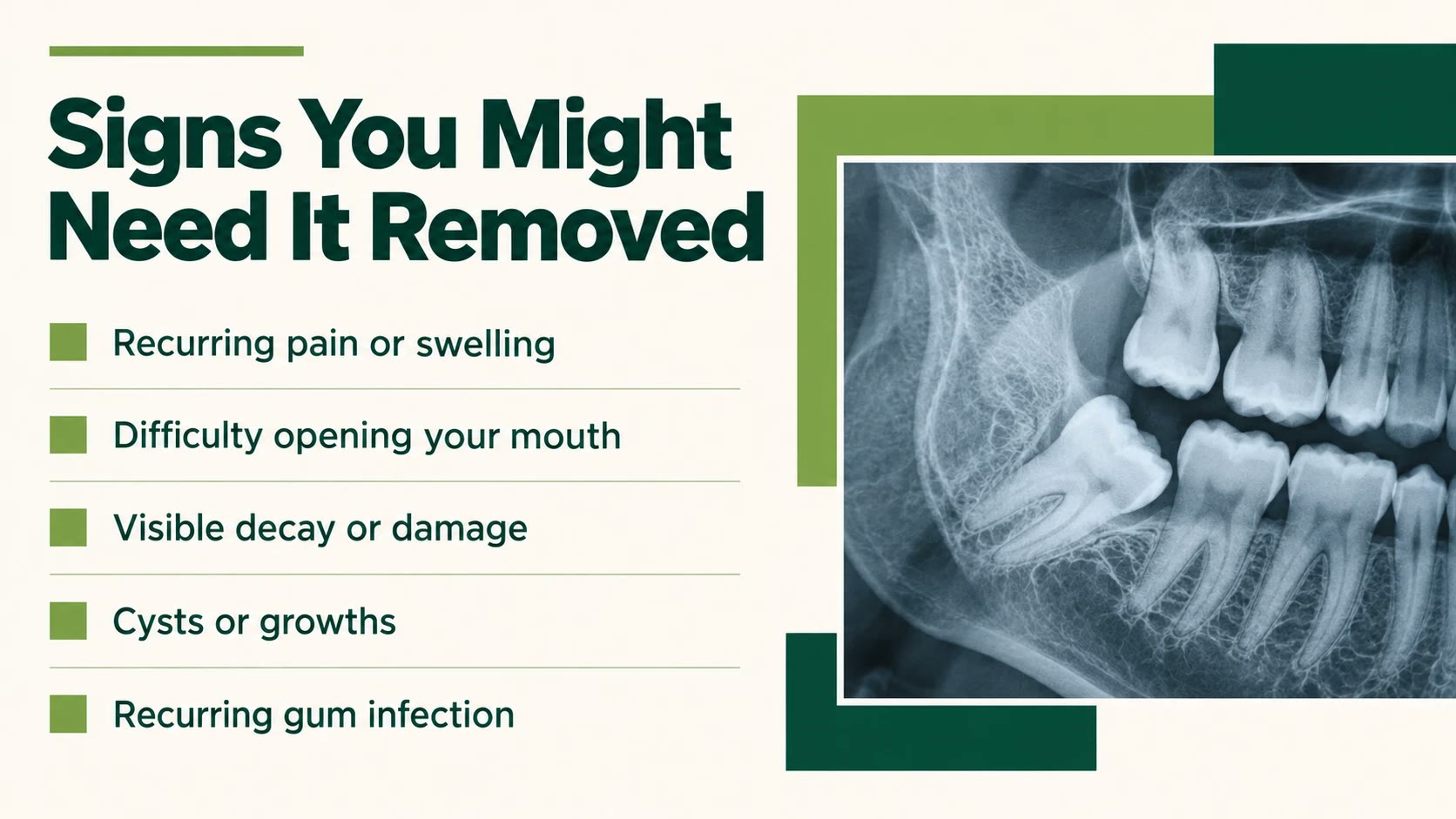
- Recurring pain or swelling near the back of the jaw
- Difficulty opening your mouth fully
- Visible decay on the wisdom tooth or the molar next to it
- Cysts forming around an impacted tooth
- Gum infection that keeps coming back
- Your orthodontist flags it as a factor in crowding, especially if you're mid-treatment with braces or aligners
An X-ray is really the only reliable way to know what's going on beneath the gumline — how the tooth is angled, how close it sits to a nerve, and whether it's fully or partially impacted. This is one of the more common reasons Gurugram dentists ask for a panoramic X-ray even before you've mentioned any pain.
What the day of the extraction actually looks like
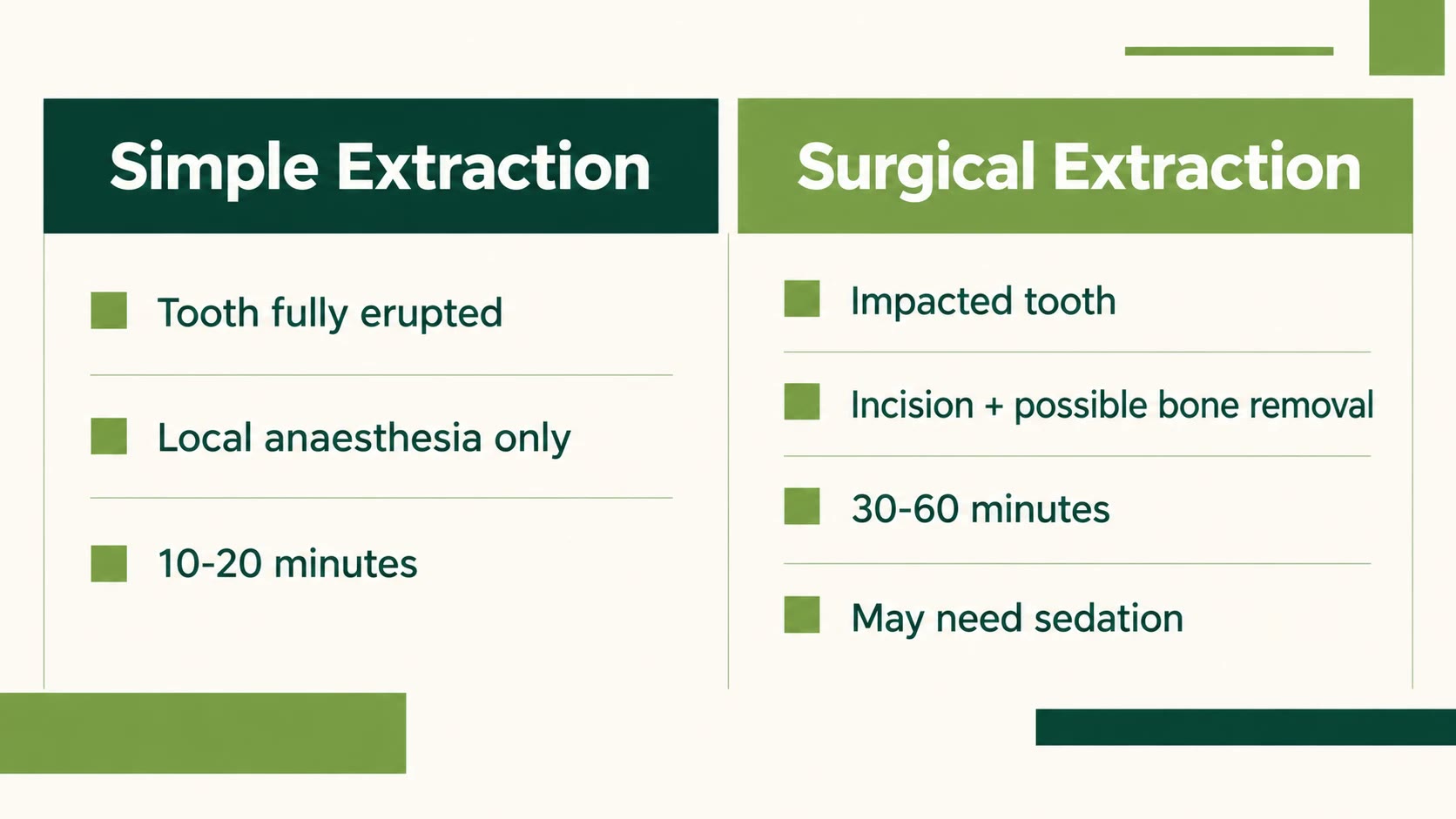
Extractions fall into two categories, and which one you need depends on how the tooth sits:
- Simple extraction — used when the tooth has fully come through the gum. The dentist loosens it and lifts it out. This is quick, usually done under local anaesthesia alone, and takes 10–20 minutes.
- Surgical extraction — needed when the tooth is impacted or hasn't broken through the gum. This involves a small incision in the gum, and sometimes removing a bit of bone or splitting the tooth into sections to take it out more easily. It takes longer, usually 30–60 minutes, and may involve sedation on top of local anaesthesia.
Either way, you shouldn't feel pain during the procedure itself — just pressure, and sometimes a bit of pulling or vibration if bone needs to be adjusted. Numbness wears off gradually over the following hours. For a surgical extraction specifically, it's worth asking the clinic about their sterilization and safety protocols, since more instruments are involved than in a simple extraction.
The first 3 days matter the most
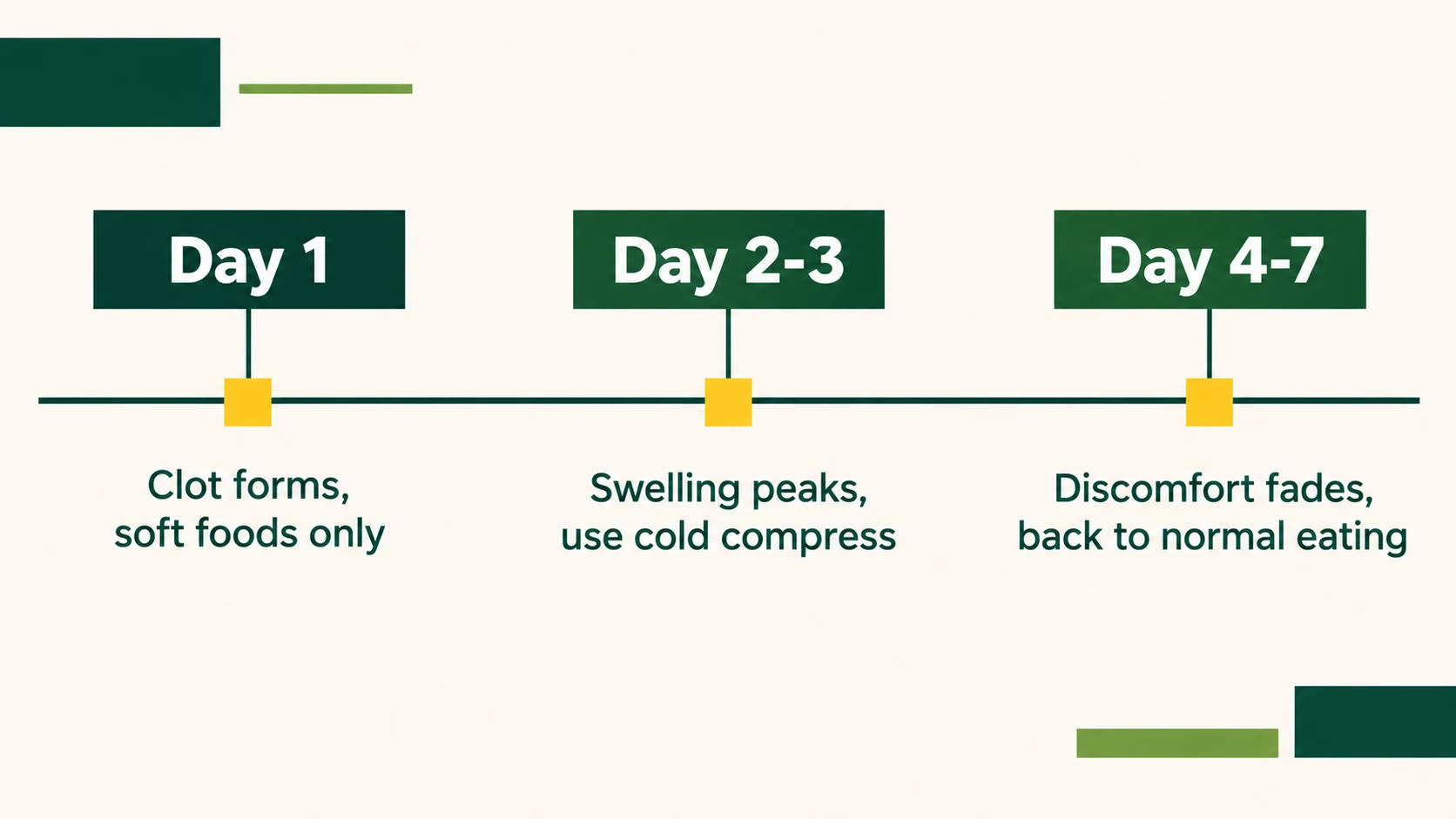
Recovery timelines vary, but the initial healing window follows a fairly predictable pattern:
- Day 1: Some bleeding and swelling are normal. Bite gently on gauze for the first hour or two to help a clot form over the socket. Stick to cold, soft foods — think yoghurt, mashed potato, a smoothie without a straw.
- Day 2–3: Swelling usually peaks around this point before it starts to go down. A cold compress on the outside of your cheek for 15–20 minutes at a time helps.
- Day 4–7: Discomfort should be noticeably less. Most people are back to normal eating and talking by the end of the week, though full gum healing takes a few weeks longer.
A few things to actively avoid during this window: using a straw (the suction can dislodge the clot and cause a painful condition called dry socket), smoking, spitting forcefully, and vigorous rinsing for the first 24 hours.
Managing pain and swelling without overdoing it
You'll usually be prescribed a short course of painkillers and sometimes antibiotics if there was infection beforehand. Beyond that:
- Rinse gently with warm salt water starting the day after surgery — it helps keep the socket clean without disturbing it.
- Keep your head slightly elevated when lying down for the first couple of nights; it reduces throbbing.
- Avoid hard, crunchy, or spicy foods until the extraction site has closed over.
- Brush normally, but steer clear of the extraction site itself for the first few days.
Call your dentist if you notice a fever, pus, a foul taste that doesn't go away with rinsing, or pain that gets worse instead of better after day 3 or 4 — that combination usually points to dry socket or an infection, and it's worth getting checked rather than waiting it out.
Does it change anything long-term?
For most people, no. Once healed, there's no gap you need to worry about since wisdom teeth sit at the very back and removing them doesn't typically affect your bite or your smile. If anything, people who were dealing with recurring pain or swelling beforehand usually notice the difference within a week or two — no more waking up with a stiff jaw or a swollen cheek for no obvious reason.
If you're in Gurgaon and unsure whether your wisdom teeth are actually causing the discomfort you're feeling, an X-ray is a fairly quick way to get a clear answer instead of guessing based on symptoms alone. The dentist near me page is a reasonable starting point if you're comparing clinics by location.
How painful is wisdom tooth removal?
You shouldn't feel pain during the procedure itself, just pressure. Discomfort after the numbness wears off is normal and usually manageable with prescribed painkillers for the first 2-3 days.
How long does recovery actually take?
Most people feel back to normal eating and talking within a week. Full healing of the gum tissue at the extraction site can take a few weeks longer.
Do all wisdom teeth need to be removed?
No. Some wisdom teeth sit quietly with no symptoms and never cause a problem. Removal is usually recommended when there's pain, infection, decay, or crowding.
What is dry socket?
Dry socket happens when the blood clot protecting the extraction site gets dislodged too early, often from using a straw or smoking. It's painful but treatable if you get it checked.


