
 02 Jul 2026
You’ve got three browser tabs open: a ₹500 whitening toothpaste, a strip kit that promises results in a week, and a dentist’s laser treatment that costs ten times as much. All three claim to whiten your teeth. None of them do it the same way, and none of them last the same length of time.
What’s Actually Making Your Teeth Look Whiter
Most stains sit in one of two places. Surface stains come from coffee, tea, wine, and smoking — they sit on the outer layer of your tooth, called enamel, and can usually be lifted off. Deeper stains sit inside the tooth itself, often from age, certain antibiotics taken as a child, or an old injury. Those need a stronger approach to shift.
Nearly every whitening product — from toothpaste to a dental chair — uses some form of peroxide (hydrogen peroxide or carbamide peroxide) to break stain molecules apart. The real difference between options is concentration and how carefully it’s applied, not some secret ingredient one brand has and another doesn’t.
At-Home Whitening: What You’re Really Paying For
- Whitening toothpaste — Mild abrasives buff away surface stains. No bleaching agent strong enough to change your natural tooth color. Cheapest option, weakest result.
- Whitening strips — A thin peroxide gel strip worn for 15–30 minutes a day over one to two weeks. Noticeable brightening for surface stains, minimal effect on deeper discoloration.
- At-home trays or kits — A stronger gel worn in a mouth tray, sometimes fitted by a dentist, sometimes a generic one-size tray from a pharmacy. More even results than strips, but still capped at a lower peroxide strength than what’s used in a clinic.
None of these are useless — they just top out at a certain level. If your stains are mostly from your morning chai and evening coffee, an at-home option can genuinely work well.
In-Clinic Whitening: What Actually Happens
A professional session usually takes 45 to 90 minutes in a single visit. The dentist protects your gums, applies a much higher-strength peroxide gel, and often uses a light or laser to speed up the reaction. Because it’s done under supervision, the concentration can safely go higher than anything sold over the counter — which is why results show up in one sitting instead of two weeks of strips.
This is also the route that tends to work on stains at-home kits can’t touch — the kind that sit deeper in the tooth rather than just on the surface.
What Actually Moves the Price
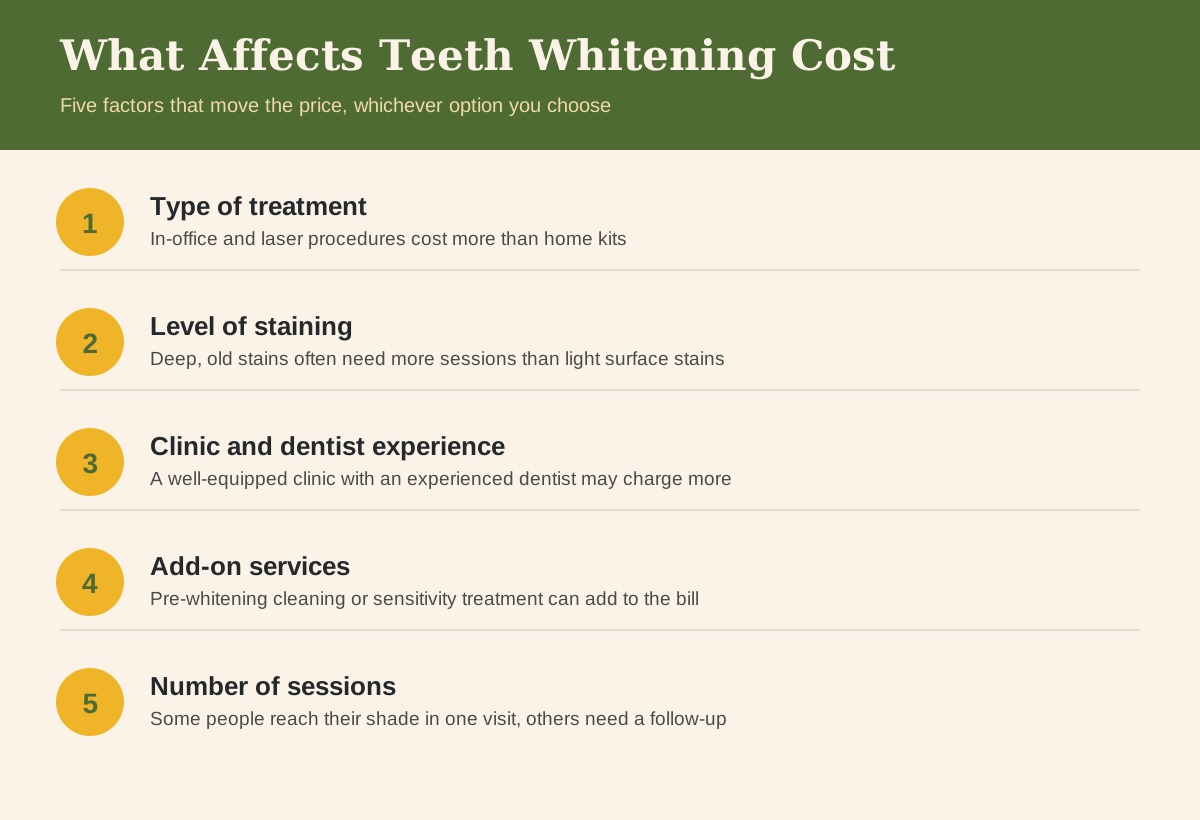
A few things push the cost up or down, no matter which option you pick.
- Type of treatment. In-office and laser procedures cost more than home kits, since they use stronger, faster-acting gel under professional supervision.
- Level of staining. Deep, old stains often need more sessions than light surface stains.
- Clinic and dentist experience. A well-equipped clinic with an experienced dentist may charge more, but the safety checks are usually better too.
- Add-on services. Pre-whitening cleaning or sensitivity treatment can add a bit to the final bill.
- Number of sessions. Some people get their shade in one visit; others need a follow-up.
Side by Side
| At-Home | In-Clinic | |
|---|---|---|
| Typical cost | Low (strips/toothpaste) to moderate (trays) | Higher, one-time |
| Time to see results | 1–2 weeks | Single 45–90 minute session |
| How long it lasts | A few months, fades faster | 6 months to 2+ years with care |
| Works on deeper stains | Rarely | Often, depending on the cause |
| Supervision | None to minimal | Dentist-monitored |
When Whitening Won’t Work — or Isn’t Worth It
- Crowns, veneers, and fillings don’t whiten. If you have visible dental work in front, whitening the rest of your teeth can leave a mismatch instead of a match.
- Stains from certain antibiotics or old trauma often respond better to a different fix entirely, like veneers or bonding, rather than any whitening method.
- If your teeth are already sensitive, both at-home and in-clinic whitening can make that worse for a few days. Worth factoring in if you already wince at cold water.
What Makes Results Last Longer
- Skip coffee, tea, red wine, and smoking for the first 48 hours after any whitening treatment, when teeth are most porous and most likely to re-stain.
- Use a straw for dark drinks going forward — small habit, real difference over months.
- Touch-up strips every few months keep in-clinic results going longer without another full session.
- Good brushing habits matter more than people expect. Plaque buildup dulls whitening faster than diet alone.
Picking Between the Two
If your goal is a slightly brighter smile before a small event and your stains are recent, an at-home kit is a reasonable place to start. If you’ve tried strips before and been disappointed, or your staining goes back years, an in-clinic session is doing genuinely different chemistry — not just a stronger version of the same thing.
Gurgaon has no shortage of clinics offering laser whitening, which makes the marketing louder than the actual science needs to be. Once you know what’s happening at each price point — mild abrasion, surface bleaching, or a supervised high-strength treatment — the gap between a ₹500 toothpaste and a same-day clinic visit stops feeling like a mystery and starts feeling like a straightforward trade-off between time, cost, and how deep your staining actually goes.
Related: Learn how our dentist-supervised teeth whitening treatment in Gurgaon works, or book an appointment at Aspen Dentals.
Frequently Asked Questions
How much does professional teeth whitening cost in Gurgaon?
The cost ranges between ₹8,000 and ₹18,000.
Does dental insurance include teeth whitening?
No, since it's a cosmetic procedure, most insurance plans don't cover the cost.
How long does professional teeth whitening last?
With good oral hygiene, results typically last 1 to 3 years before touch-ups are needed.
Does teeth whitening hurt?
Some people notice mild sensitivity for 24 to 48 hours after treatment, but it's usually temporary.
Are store-bought whitening kits as effective as professional treatment?
Not quite. They can lighten teeth slightly, but results are milder and fade faster than dentist-supervised options.
How many sessions does teeth whitening usually take?
Many patients see their desired shade in a single in-office visit, though some need a follow-up session for deeper stains.


