
 11 Jun 2026
A toothache can ruin your day. It can make eating uncomfortable, keep you awake at night, and leave you wondering if something serious is going on.
Sometimes, a toothache is caused by a minor issue. Other times, it's a sign that the soft tissue inside your tooth has become infected or damaged. When that happens, a root canal may be the best way to save the tooth and stop the pain.
The problem is that many people ignore the warning signs. They hope the pain will go away on its own. Unfortunately, an untreated infection can spread and lead to bigger dental problems.
Here are some common signs that may mean you need a root canal treatment.
What Is a Root Canal?
Before looking at the signs, it helps to understand what a root canal actually is.
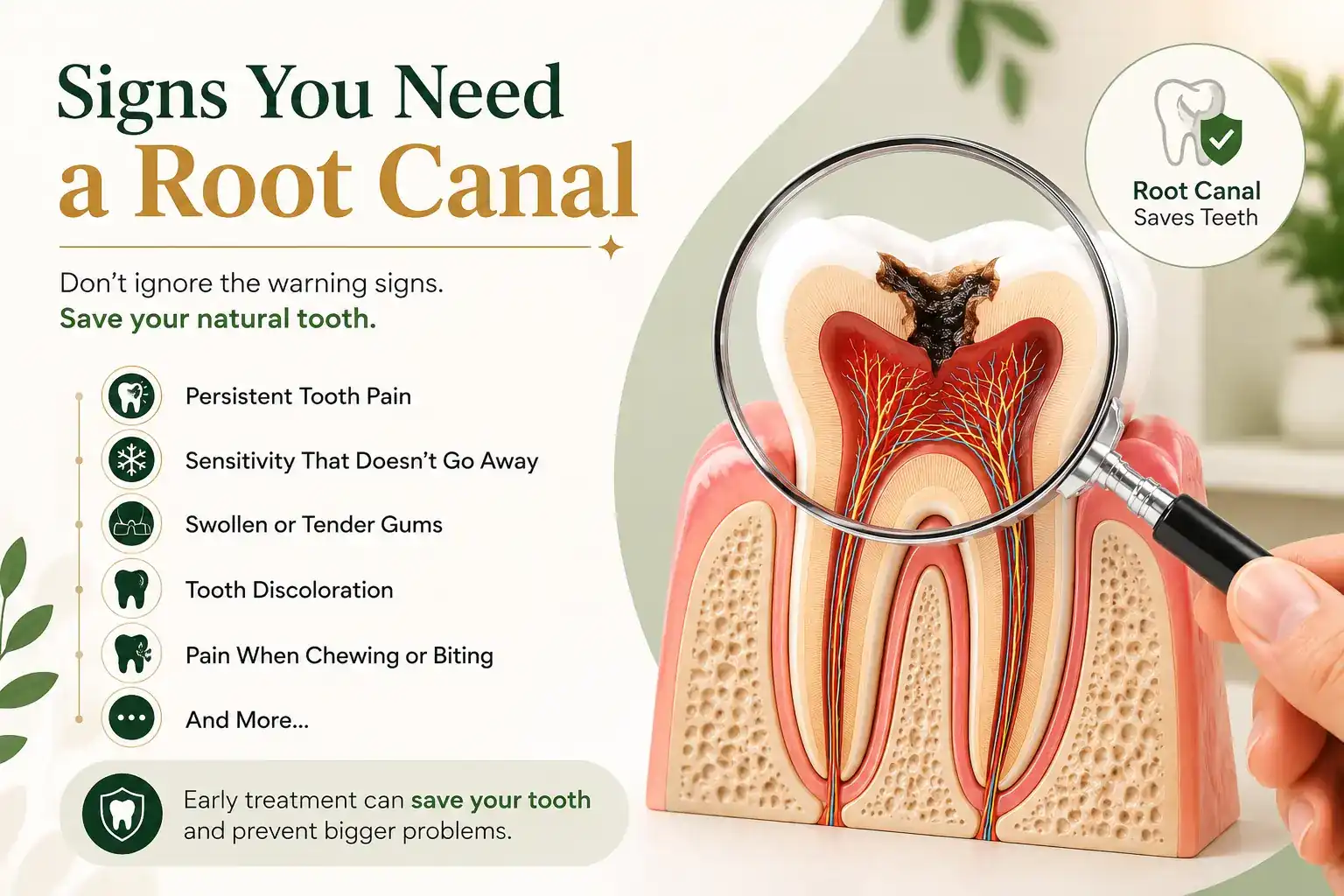
Inside every tooth is a soft tissue called pulp. Every tooth has a center section that contains nerves and a blood supply. When germs get inside, the tooth may start to ache. During a root canal, the infected area is cleaned and sealed so the tooth can continue functioning normally.
The goal is simple: save the natural tooth whenever possible.
Persistent Tooth Pain
The pain may:
- Come and go throughout the day
- Feel sharp or throbbing
- It becomes worse when chewing
- Spread to the jaw, face, or nearby teeth
Not every toothache means you need a root canal. However, pain that doesn't improve after several days should never be ignored.
If the discomfort keeps returning, it's time to schedule a dental examination.
Sensitivity That Doesn't Go Away
Most people have experienced brief sensitivity to hot coffee or ice cream.
That's usually normal.
What isn't normal is when the sensitivity lingers long after the hot or cold item is gone.
You may notice things like:
- A sharp sting when you drink something hot
- A tooth that aches after eating ice cream or cold foods
- Sensitivity that seems to get worse week by week
When the discomfort lingers rather than fading quickly, the nerve inside the tooth may be irritated or infected.
Swollen or Tender Gums
Take a quick look at the gums around the painful tooth.
If that area looks puffy or irritated, or feels sore to the touch, your tooth may need professional attention, or an infection may be beneath the surface.
Signs include:
- Puffy gums
- Tenderness when touching the area
- Small bumps near the tooth
- Gum irritation that doesn't improve
Sometimes, a small pimple-like bump may appear on the gum. This can be a drainage point for an infection and should be evaluated by a dentist as soon as possible.
Tooth Discoloration
A healthy tooth should generally match the color of surrounding teeth.
If one tooth starts turning gray, dark yellow, or brown, there may be damage inside the tooth.
This discoloration can occur when:
- The tooth has experienced trauma
- The blood supply inside the tooth is affected
- The pulp begins to die
While staining from food and drinks usually affects multiple teeth, discoloration in a single tooth deserves professional attention.
Pain When Chewing or Biting
Do you feel pain when biting into food?
This can happen when an infection reaches the inner part of the tooth and affects the surrounding tissues.
You might notice:
- Pain when chewing
- Discomfort when applying pressure
- A feeling that the tooth is sensitive to touch
Many people avoid chewing on one side of their mouth because of this issue.
Although other dental conditions can cause similar symptoms, a root canal may be necessary if the pulp is infected.
A Chipped or Cracked Tooth
Even a small crack can create a pathway for bacteria.
Cracks can happen because of:
- Sports injuries
- Falls
- Biting hard foods
- Teeth grinding
When bacteria enter through the damaged area, they can reach the pulp and cause infection.
A cracked tooth doesn't always hurt immediately. Sometimes the damage develops slowly, and symptoms appear weeks or months later.
That's why a dentist should check any chipped or cracked teeth.
Deep Decay
Cavities don't stop growing on their own. Warning signs may include:
- Visible holes in the tooth
- Dark spots on the enamel
- Food is getting trapped in the cavity
- Increased tooth sensitivity
Regular dental visits help catch cavities early before root canal treatment becomes necessary.
Loose Tooth
An infected tooth can sometimes feel loose.
This happens because infection may affect the surrounding bone and supporting structures.
A loose tooth can result from several dental conditions, but if it occurs alongside pain or swelling, it should be evaluated quickly.
Taking care of it early may help you avoid more complicated treatment later.
Swelling in the Face or Jaw
A dental infection doesn't always stay inside the tooth.
As it progresses, it can spread into nearby tissues.
Signs may include:
- Swelling in the cheek
- Jaw tenderness
- Enlarged lymph nodes
- Difficulty opening the mouth comfortably
This situation requires prompt dental attention.
Ignoring facial swelling can allow the infection to worsen and potentially affect other areas of the body.
What Happens If You Delay Treatment?
Many people put off treatment because they're nervous about root canals.
The infection is often more painful than the treatment itself.
Delaying treatment can lead to:
- Increased pain
- Larger infections
- Abscess formation
- Bone loss around the tooth
- Tooth extraction
Saving a natural tooth is usually easier and less expensive than replacing a lost one.
Waiting rarely makes the problem smaller.
When Should You See a Dentist?
You don't need to diagnose yourself.
If you notice any of the following, schedule an appointment:
- Persistent tooth pain
- Lingering hot or cold sensitivity
- Swollen gums
- Tooth discoloration
- Pain when chewing
- A cracked tooth
- Facial swelling
A dentist can examine the tooth, take digital X-rays if needed, and determine whether a root canal is the right solution.
Don't Ignore the Warning Signs
Your teeth rarely become painful without a reason.
Pain, swelling, sensitivity, and discoloration are often your body's way of telling you that something needs attention.
A root canal keeps your natural tooth instead of losing it, stops infection from spreading, and you can eat, speak, and smile comfortably. If you've been dealing with any of these symptoms, don't wait for the problem to become worse. Getting it checked early can make all the difference.
Related: See how root canal treatment in Gurgaon is done at Aspen Dentals, or book an appointment.
Frequently Asked Questions
1. Is root canal treatment painful?
Not at all, local anesthesia helps keep you comfortable during treatment.
2. How long does a root canal take?
It depends on the tooth and the severity of the infection, but many treatments are completed in one or two visits.
3. Can a tooth infection heal on its own?
Unfortunately, no. Once a tooth is infected, the problem usually won't go away without dental treatment.
4. What happens after a root canal?
After the infection is removed, the tooth is capped and may be covered with a crown to help protect it during everyday use.
5. Can I eat after a root canal?
You can, but it's best to wait until the numb feeling is gone. Your dentist may also suggest softer foods for a short time.
6. How do I know if I need a root canal or a filling?
The only way to know for sure is to have the tooth checked by a dentist, who can see how deep the damage goes.


