
 03 Oct 2026
Proper dental implant aftercare plays an important role in a smooth recovery and successful healing. This guide walks you through the first week after implant surgery, explains what is normal and what is not, and shows when to contact your dentist. If you are planning dental implants in Gurgaon, it will help you know what to expect.
Important: Recovery varies depending on the type of implant procedure, bone grafting, medical history and individual healing. Always follow the postoperative instructions provided by your dentist or oral surgeon. Contact your dental team if you are concerned about your symptoms.
The First 24 Hours After Implant Surgery
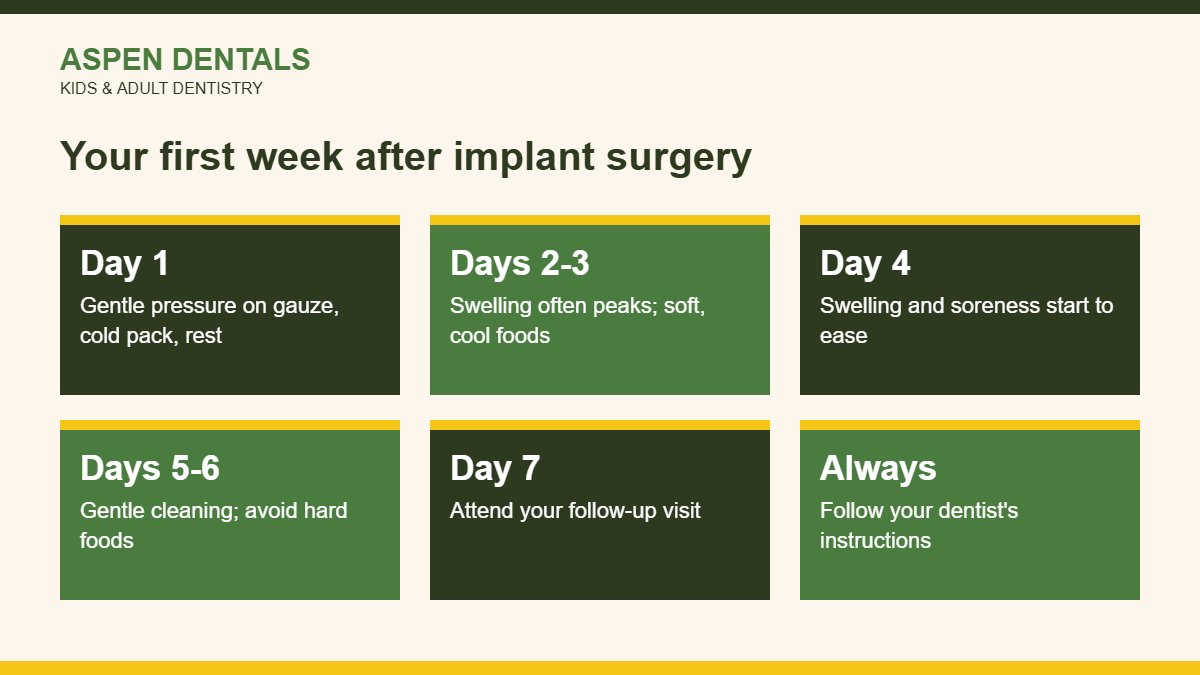
Some bleeding, mild swelling and numbness are common on the first day. Bite gently on the gauze for as long as your dentist advises.
Take any prescribed pain medication exactly as directed by your dentist. If advised, taking it before the anaesthetic completely wears off can help you stay ahead of discomfort.
Rest with your head slightly raised. Apply a cold pack to the cheek for 15 minutes at a time, with breaks in between, to help limit swelling.
Avoid spitting, rinsing forcefully or using a straw, because these can disturb the blood clot that protects the surgical site. Very hot foods and drinks, especially during the first 24 hours, may irritate the surgical area and can contribute to bleeding.
Days 2 to 3: When Swelling Often Peaks
Swelling commonly peaks around 48 to 72 hours after surgery, so some increase on day two or three can be normal. Continue with soft, cool or lukewarm foods and plenty of rest.
From around 24 hours after surgery, your dentist may recommend gentle warm salt-water rinses. Follow the specific instructions given for your procedure, and keep following your dental implant aftercare plan closely during these days.
Days 4 to 7: Settling Into Recovery
For many patients, swelling and soreness begin to ease during this period. Keep your mouth clean as advised and take any prescribed medicines for the full course.
Attend your follow-up appointment if one is booked. It allows your dentist to check healing, assess the surgical site, review or remove sutures, check implant stability and decide when the restoration can proceed.
Dental Implant Aftercare Diet: What to Eat and Avoid
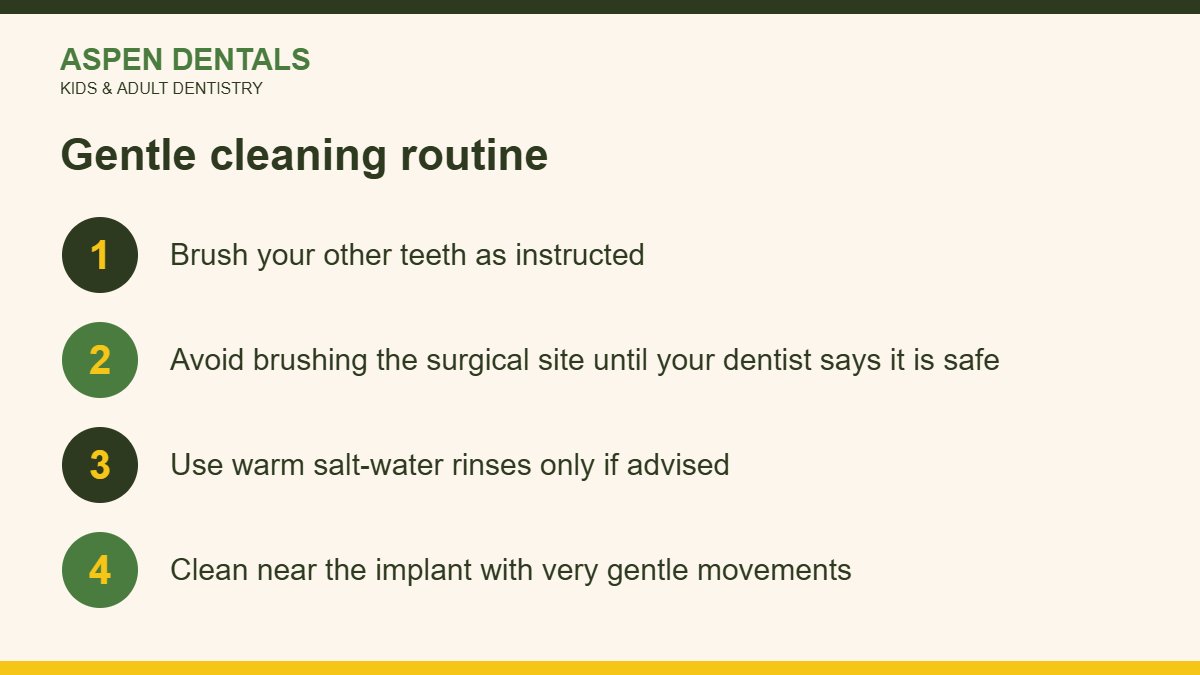
For the first few days, choose soft foods. Yoghurt, dal, khichdi, mashed potato, smoothies and soft scrambled eggs are all good choices. Eat on the side of your mouth away from the implant.
Your dentist will tell you which foods to avoid and for how long, because the timeframe depends on your procedure. In general, avoid:
- Very hot foods and drinks, especially early on, as they may irritate the surgical area
- Hard, crunchy or chewy foods around the implant until your dentist confirms it is safe to resume your normal diet
- Spicy food that can irritate the gum
- Alcohol, unless your dentist says otherwise
How to Clean Your Mouth Without Harming the Implant
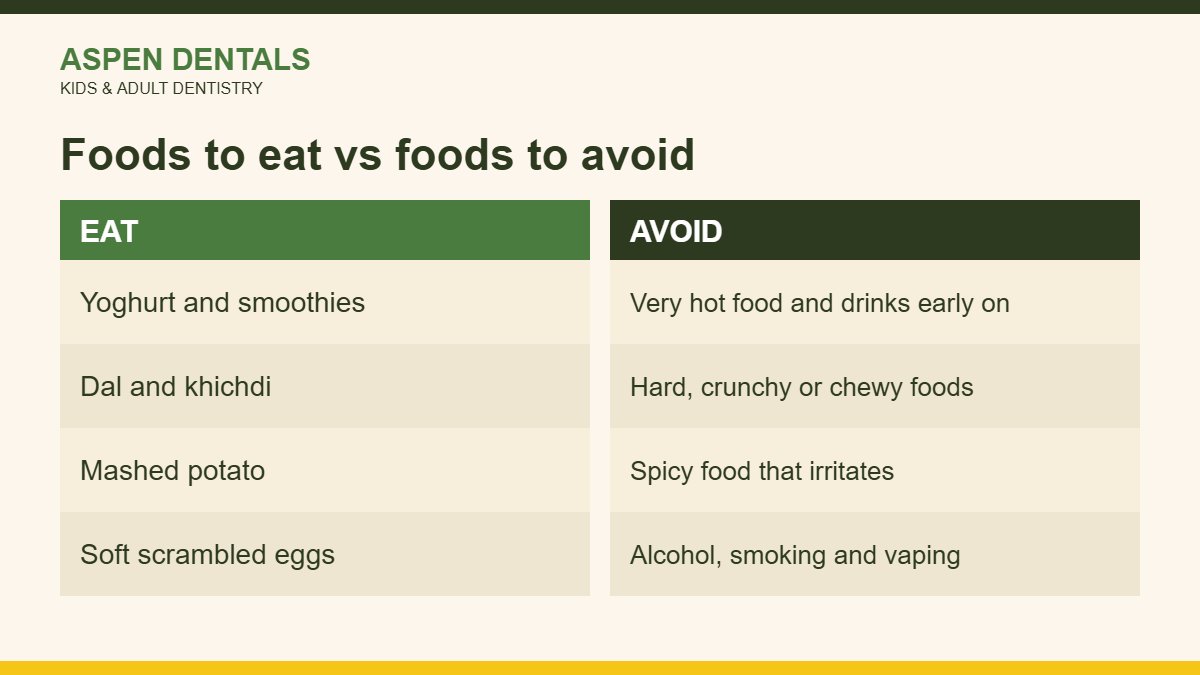
Continue brushing your other teeth as instructed. Avoid directly brushing the surgical site until your dentist tells you it is safe. When cleaning around the area, use a soft toothbrush and very gentle movements. If your dentist prescribed an antibacterial mouthwash, use it exactly as directed.
Good oral hygiene becomes especially important once your crown is placed, because plaque around an implant can cause gum infection. Your dentist will tell you when to start flossing or using an interdental brush near the implant. The American Dental Association explains safe cleaning habits on its patient education site.
What to Avoid During Healing
Avoid smoking and vaping during healing
Tobacco can interfere with wound healing and increase the risk of implant complications. Follow your dentist's recommended period of abstinence.
Avoid strenuous exercise initially
Take it easy for the first few days. Follow your dentist's instructions before returning to strenuous exercise, because it can increase discomfort or bleeding.
Warning Signs and When to Contact Your Dentist
Contact your dentist promptly if you notice any of these symptoms, so they can assess the area and provide appropriate treatment:
- Bleeding that does not slow down after several hours of gentle pressure
- Pain that keeps getting worse instead of easing
- Swelling that continues to worsen after about 72 hours, or becomes increasingly painful
- Fever, pus or a bad taste that does not clear
- An implant or temporary tooth that feels loose
At Aspen Dentals, our team reviews implant patients at follow-up visits, so you do not have to guess whether your healing is on track.
What Happens After the First Week
Dental implant aftercare continues beyond week one. The soft tissues usually heal over the first one to two weeks, while the implant gradually integrates with the jawbone over the following months, commonly around three to six months depending on the case. Your dentist may place a temporary tooth or a healing cap during this time.
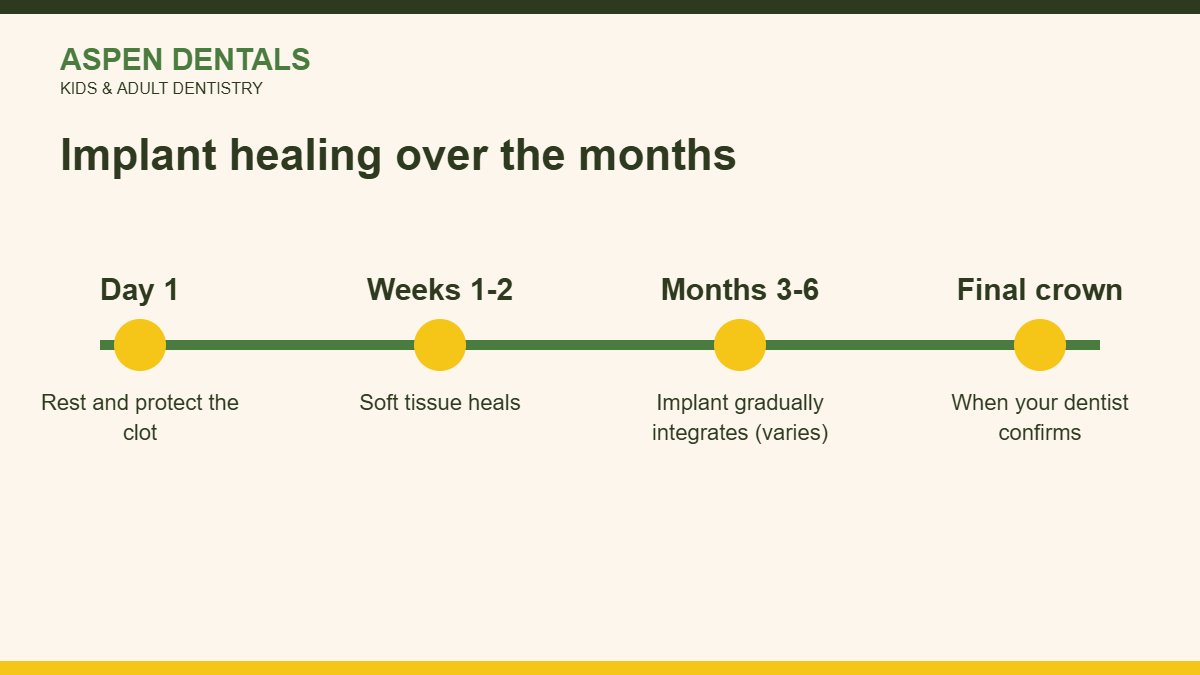
Your dentist will determine when the implant has healed sufficiently for the final restoration, so keep every follow-up appointment.
Once healed, an implant needs the same daily care as natural teeth: brushing twice a day, flossing and regular check-ups. You can read more in our guide on how long dental implants last. If you are comparing prices, see our breakdown of dental implants cost in Gurgaon.
Careful dental implant aftercare helps protect your implant for years. To find out whether implants suit you, explore our dental implants service in Gurgaon or book an appointment at our Sector 53 or Sector 65 clinic.
When can I eat normally after a dental implant?
Many patients gradually return to a normal diet as the soft tissues heal, but the timing varies by procedure. Follow your dentist's instructions before chewing normally on the implant side.
Can I brush my teeth after implant surgery?
Continue brushing your other teeth as instructed. Avoid directly brushing the surgical site until your dentist tells you it is safe, then use a soft toothbrush with very gentle movements.
Is it normal for swelling to increase on day two?
Yes. Swelling commonly peaks around 48 to 72 hours after surgery. Contact your dentist if it keeps worsening after about 72 hours or becomes increasingly painful.
How do I know if my implant is healing well?
Pain and swelling should start to ease after the first few days. Pain that keeps getting worse, pus, fever or an implant that feels loose are signs to call your dentist.


