
 17 Jun 2026
A healthy tooth is meant to last a lifetime. However, decay, fractures, large fillings, or root canal treatment can weaken a tooth to the point where it needs extra protection. In such cases, a dental crown is often the most reliable solution.
If you're searching for dental crown treatment in Gurgaon, the goal should be more than simply covering a damaged tooth. A well-made dental crown restores strength, improves appearance, and helps you chew comfortably while preserving your natural tooth for years.
At Aspen Dentals, every crown is designed as your natural teeth in shape, color, and bite. The result is a restoration that feels comfortable and blends naturally with your smile.
What Is a Dental Crown?
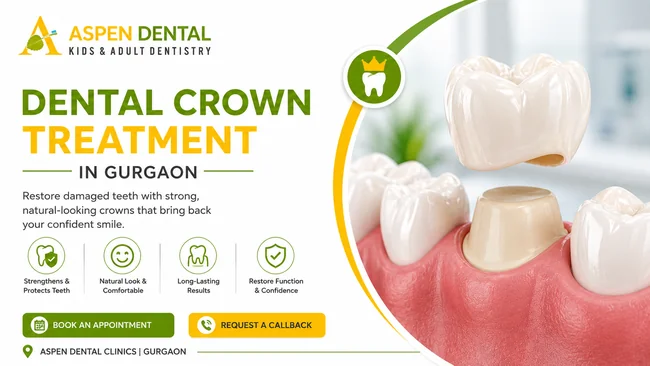
A dental crown is a custom-made cap that completely covers a damaged or weakened tooth. It restores the tooth's original shape, size, and strength while protecting it from further damage.
Unlike a dental filling, which repairs only a small portion of a tooth, a crown covers the entire visible part of the tooth above the gum line. This makes it a suitable treatment when the remaining tooth structure is not strong enough to support a filling.
To learn more about treatment options, visit our Dental Crowns in Gurgaon page:
https://www.aspendentals.com/dental-crowns-in-gurgaon
When Does a Tooth Need a Dental Crown?
A dentist may recommend a dental crown in several situations.
After a Root Canal
A tooth that has undergone root canal treatment becomes more fragile over time. Placing a crown protects it from cracking during normal chewing.
Large Cavities
If a cavity has damaged a significant part of the tooth, a filling alone may not provide enough support. A crown strengthens the remaining tooth structure.
Broken or Cracked Teeth
Accidents, sports injuries, or biting hard foods can crack a tooth. Depending on the extent of damage, a dental crown can restore both function and appearance.
Worn Teeth
Years of teeth grinding or natural wear can reduce the height of teeth. Crowns rebuild the lost structure and improve the bite.
Cosmetic Improvement
Some teeth are permanently discolored, misshapen, or uneven. A crown can improve their appearance while maintaining durability.
Different Types of Dental Crowns
The right crown depends on the location of the tooth, your bite, and your aesthetic expectations.
Zirconia Crowns
Zirconia crowns are one of the most popular choices today. They are strong, metal-free, and closely resemble natural teeth. They work well for both front and back teeth.
Ceramic Crowns
Ceramic crowns offer excellent aesthetics, making them a preferred option for front teeth where appearance matters most.
Porcelain-Fused-to-Metal Crowns
These crowns combine the strength of metal with a porcelain outer layer. They have been used successfully for many years and remain a reliable choice.
Metal Crowns
Metal crowns are exceptionally durable and are generally used on back molars where they are less visible.
During your consultation, the dentist explains the advantages of each material before recommending the most suitable option.
What Happens During Dental Crown Treatment?
Many patients worry that getting a crown will be painful or complicated. In reality, the procedure is straightforward and is usually completed over two appointments.
Initial Examination
The dentist examines the affected tooth and may take digital X-rays to check the roots and surrounding bone. This helps determine whether the tooth can support a crown or requires additional treatment first.
Tooth Preparation
The damaged portion of the tooth is removed, and the remaining structure is gently shaped to create space for the crown.
Digital Impressions
Accurate impressions are taken so that the dental laboratory can fabricate a crown that fits comfortably and matches your natural bite.
Temporary Crown
A temporary crown protects the prepared tooth while the permanent crown is being made.
Final Placement
During the next visit, the permanent crown is checked for fit, color, and bite before being securely cemented into place.
Once fitted, the crown feels much like a natural tooth.
Benefits of Dental Crowns
Dental crowns offer several long-term advantages.
- Protect weak teeth from breaking
- Restore comfortable chewing
- Improve the appearance of damaged teeth
- Strengthen teeth after root canal treatment
- Support large fillings
- Restore normal speech and bite
- Match the color of surrounding teeth
- Help preserve natural teeth for many years
A properly fitted crown can significantly improve both oral health and confidence.
How Long Do Dental Crowns Last?
Most quality dental crowns last between 10 and 15 years, and many remain in excellent condition even longer.
Their lifespan depends on several factors, including:
- Daily brushing and flossing
- Regular dental check-ups
- Avoiding habits such as chewing ice or opening packets with teeth
- Wearing a night guard if you grind your teeth
Good oral hygiene helps protect not only the crown but also the natural tooth underneath.
Can a Dental Crown Look Natural?
Yes.
Modern crowns are carefully designed to resemble natural teeth. Their color, shape, and size are matched with the surrounding teeth, making them difficult to distinguish from your original smile.
Patients receiving crowns on their front teeth often appreciate how naturally they blend with the rest of their teeth.
Healthy Gums Matter Too
Even the highest-quality dental crown depends on healthy gums for long-term success.
If you experience bleeding gums, persistent bad breath, swelling, or gum recession, these issues should be addressed before or alongside restorative treatment.
At Aspen Dentals Gurgaon, periodontal care is led by Dr. Abhinav Kathuria, who specializes in diagnosing and treating gum disease. Healthy gums provide the stable foundation every dental crown needs.
Learn more about Dr. Abhinav Kathuria, Best Periodontist in Gurgaon:
https://www.aspendentals.com/best-periodontist-in-gurgaon
Caring for Your Dental Crown
Maintaining a dental crown is simple and requires the same care as your natural teeth.
- Brush twice every day using a soft-bristled toothbrush.
- Floss daily to keep the gum line healthy.
- Limit very sticky or extremely hard foods.
- Visit your dentist every six months for a routine examination.
- Wear a mouthguard if you play contact sports or grind your teeth while sleeping.
Following these habits can help your crown remain functional for many years.
Why Patients Choose Aspen Dentals
Choosing the right dental clinic is just as important as choosing the right treatment.
Patients visit Aspen Dentals for personalized care delivered by modern technology and experienced clinicians. Every treatment plan is prepared after a detailed examination, ensuring that recommendations are based on your individual dental condition rather than a one-size-fits-all approach.
The clinic focuses on preserving natural teeth whenever possible and uses high-quality materials that deliver both durability and aesthetics.
If you are looking for an experienced dentist near you, visit:
https://www.aspendentals.com/dentist-near-me
Schedule Your Consultation
A damaged tooth rarely heals on its own. Delaying treatment can allow cracks to worsen or decay to spread, making later treatment more extensive.
If you have a weak, fractured, or heavily restored tooth, a dental examination can determine whether a crown is the right solution.
Book your consultation with Aspen Dentals to receive a personalized treatment plan and restore your smile with a durable, natural-looking dental crown.
Book an Appointment:
https://www.aspendentals.com/book-an-appointment
Request a Callback:
Frequently Asked Questions
Is dental crown treatment painful?
No. The procedure is performed under local anesthesia, so patients generally experience little to no discomfort.
How many appointments are required?
Most dental crowns require two visits, although some cases may vary depending on the treatment involved.
Can I eat normally after getting a crown?
Yes. Once the permanent crown is fixed, you can return to your regular diet. It is still advisable to avoid biting very hard objects directly with the crowned tooth.
Will my crown match my natural teeth?
Yes. Modern ceramic and zirconia crowns are customized to blend with the color and shape of your existing teeth.
Can a crown be replaced?
Yes. If a crown becomes damaged or wears out after many years, it can usually be replaced following an examination.


