

 16 Sep 2026
You spit after brushing and there it is - a pink tinge in the sink. Is that normal, or a warning sign?
The honest answer: it depends on how often it happens, how much blood there is, and what else is going on with your gums. Here's how to tell the difference.
When a Little Blood Is Nothing to Worry About
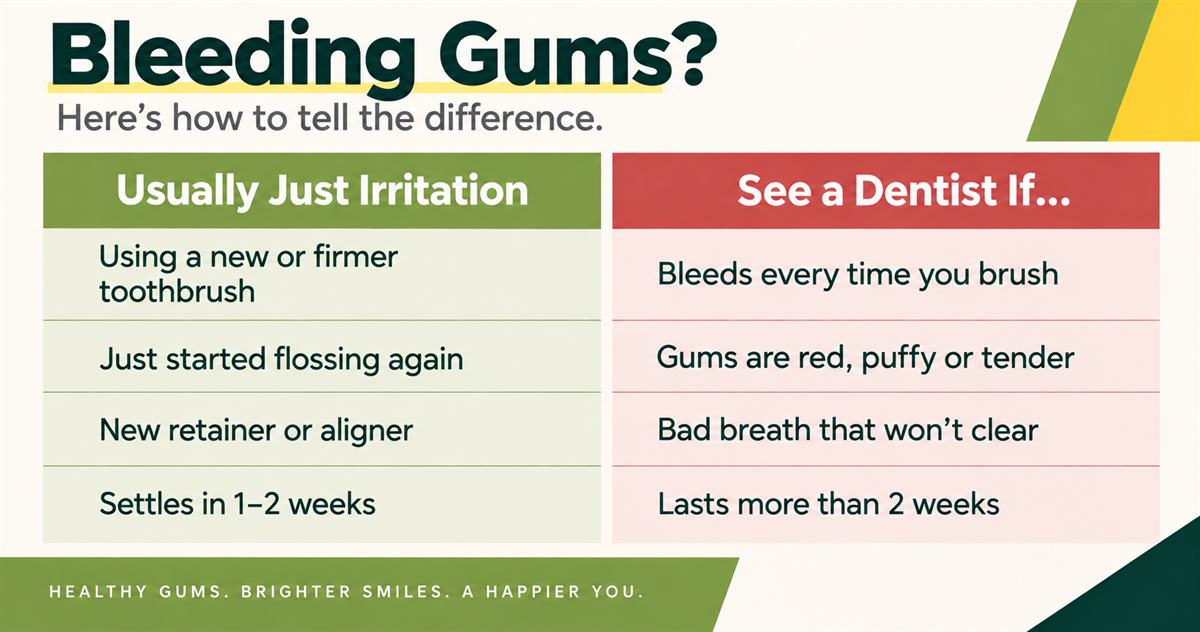
Minor bleeding once in a while, especially if you've just started flossing again or switched to a firmer toothbrush, usually isn't a red flag. Your gums are soft tissue, and they can get irritated the same way any tissue does when you're rough with it.
Common, low-concern causes:
- Brushing too hard, especially with a hard-bristled brush
- Flossing after a long gap, when gums aren't used to it
- A new mouthguard, retainer, or aligner that rubs against the gumline
- Pregnancy, which raises hormone levels and can make gums more sensitive and prone to swelling
In these cases, the bleeding usually settles down within a week or two once your gums adjust or you correct the habit causing it.
When It's a Sign of Something More
Gums that bleed almost every time you brush or floss - not just occasionally - are usually telling you something. The most common cause is gingivitis, the early stage of gum disease caused by plaque (the soft, sticky film of bacteria that builds up on teeth) sitting along the gumline for too long.
Signs that point toward gingivitis rather than simple irritation:
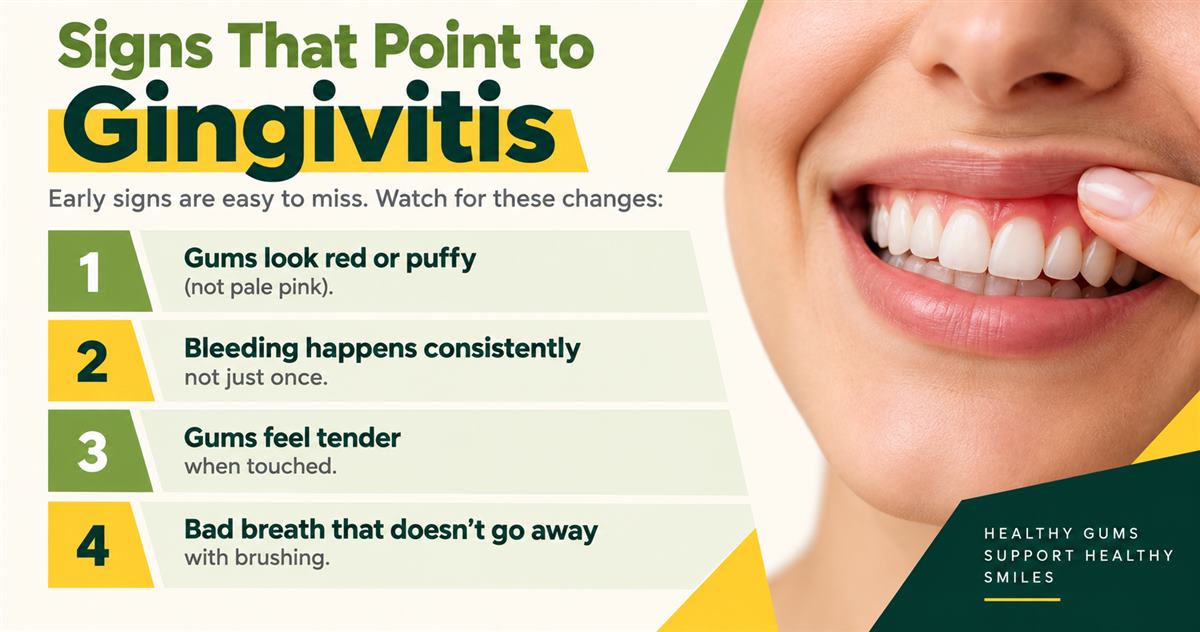
- Gums look red or puffy instead of their usual pale pink
- Bleeding happens consistently, not just once
- Your gums feel tender when you touch them
- You notice bad breath that doesn't go away with brushing
Gingivitis is reversible. Left alone, though, it can progress into periodontitis - a more advanced form of gum disease where the infection starts affecting the bone and tissue holding your teeth in place. That's a bigger problem, since bone loss around teeth doesn't grow back on its own. The National Institute of Dental and Craniofacial Research has a useful breakdown of how this progression works if you want the deeper clinical picture.
What Actually Helps
Most cases of bleeding gums improve with a few consistent habits rather than anything drastic:
- Switch to a soft-bristled brush. Firm bristles feel like they're cleaning better, but they often just scrape the gumline.
- Brush at a 45-degree angle, gently, in small circles rather than side-to-side scrubbing.
- Floss once a day, even if it makes you bleed at first. The bleeding from flossing after a gap usually stops within a week as the gums toughen up.
- Use an antiseptic or fluoride mouthwash if recommended, especially if plaque buildup is part of the picture.
- Get a professional cleaning if it's been more than six months. Plaque that's hardened into tartar can't be removed by brushing alone - it needs a dental instrument called a scaler. Clinics that follow strict sterilization and safety protocols will always use freshly sterilized instruments for this.

When to Actually Get It Checked
A little bleeding after a rough flossing session doesn't need an appointment. But a few situations are worth getting looked at rather than waiting out:
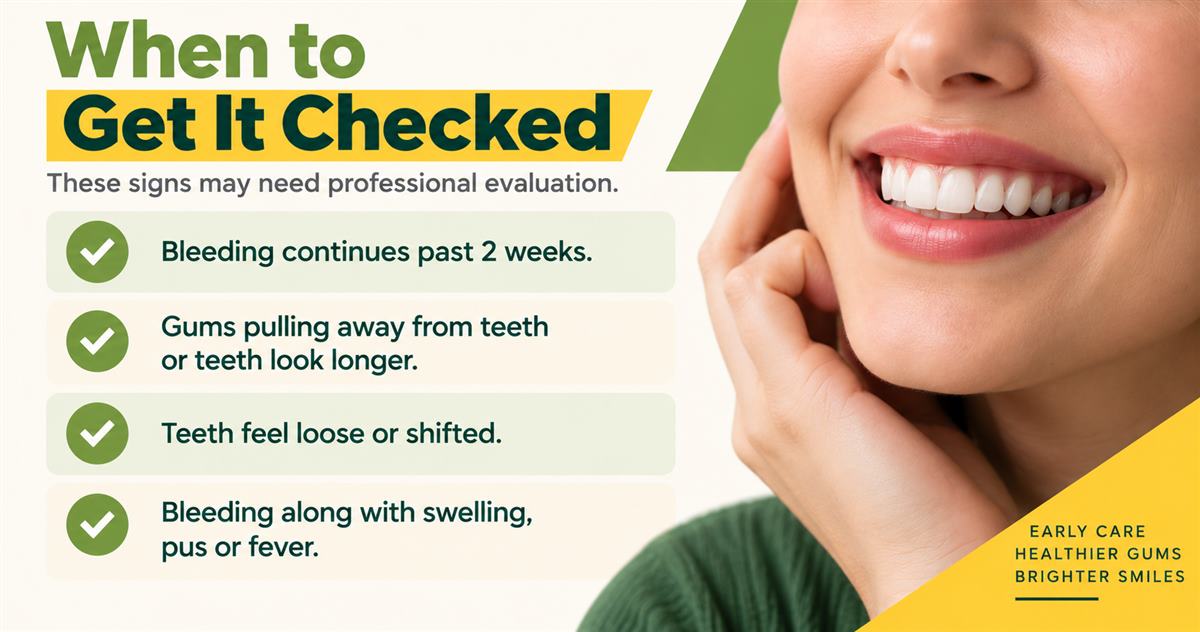
- Bleeding that continues for more than two weeks despite gentler brushing and regular flossing
- Gums that are pulling away from your teeth, making them look longer than before
- Teeth that feel loose or have shifted position
- Persistent bad breath or a bad taste that doesn't clear up
- Bleeding alongside swelling, pus, or fever
If you live around Gurgaon, gum treatment is a fairly routine part of what most general and periodontal dentists handle, so it's not something that needs a specialist hunt. A periodontist - a dentist who specializes in gums and the structures supporting your teeth - will typically start with a cleaning and a check of your gum pockets, the small gaps between tooth and gum that dentists measure to gauge gum health.
If you're comparing clinics, the dentist near me page is a reasonable starting point for narrowing down options by location, including the Sector 53 clinic if you're around Golf Course Road.
The Bigger Picture
Bleeding gums are your mouth's version of a smoke alarm - sometimes it's just steam from the shower, and sometimes it's an actual fire. The frequency and pattern matter more than the amount of blood you see in the sink on any given day.
A single bloody spit after aggressive flossing is your gums adjusting. Bleeding every single day, especially alongside redness or swelling, is your gums asking for a bit more attention than they've been getting.
How long does it take for bleeding gums to stop?
If it's from a new flossing habit or a firmer brush, it usually settles within a week or two. If it continues past two weeks, it's worth getting checked.
Can gingivitis be reversed?
Yes. Gingivitis is the early, reversible stage of gum disease. Left untreated, it can progress into periodontitis, which affects the bone and tissue holding your teeth in place.
Is a little blood after flossing normal?
Occasional, minor bleeding right after you start flossing again is common and usually settles as your gums adjust. Bleeding every single time is a different signal.
What's the difference between gingivitis and periodontitis?
Gingivitis is inflammation limited to the gums and is reversible with better cleaning habits. Periodontitis is more advanced and involves the bone and tissue around teeth, which doesn't grow back on its own.


